







When Alice Ensor opened another adoption application at Muttville Senior Dog Rescue, nothing about it immediately seemed unusual. A woman named Johanna wanted to bring a dog into her home, and she had carefully explained her living situation and the support available to her.
Then Alice noticed Johanna’s age.
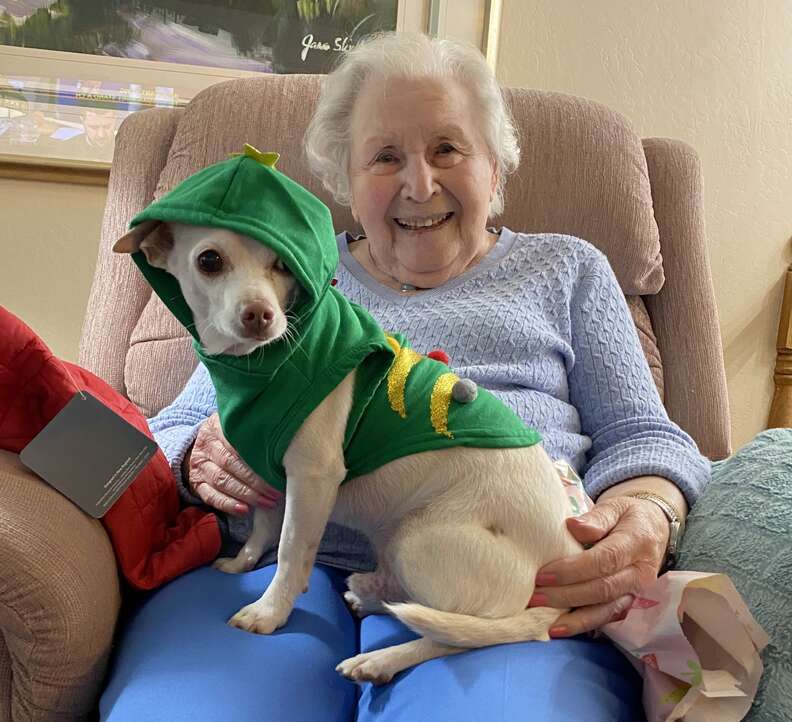
She was 100 years old.
In her work as an adoption counselor, Alice had encountered plenty of people eager to give older dogs a second chance. But an application from someone preparing to celebrate her 101st birthday was something she didn’t see every day.
Her surprise soon gave way to curiosity. Johanna wasn’t simply expressing a passing interest in having a pet. She had thought about what caring for a dog would require, and her application showed that she had people ready to help.
What Alice didn’t know yet was that an elderly dog named Gnocchi had been waiting at the rescue for someone with almost exactly the kind of home Johanna could offer.
And after spending so much time without a family of his own, Gnocchi was about to find himself in the lap of a woman who had plenty of love left to give.
For Johanna, adopting a dog at 100 wasn’t about doing something remarkable for her age. She wanted what countless dog lovers want: a companion to share her days with, someone to care for, and the simple pleasure of having an animal nearby.
Age had not changed that desire.
Still, adopting a dog is a responsibility at any stage of life. Dogs need meals, exercise, veterinary care, attention, and someone who can make decisions about their well-being. Those needs don’t disappear just because an adoption story sounds especially touching.
Fortunately, Johanna wasn’t approaching the decision alone.
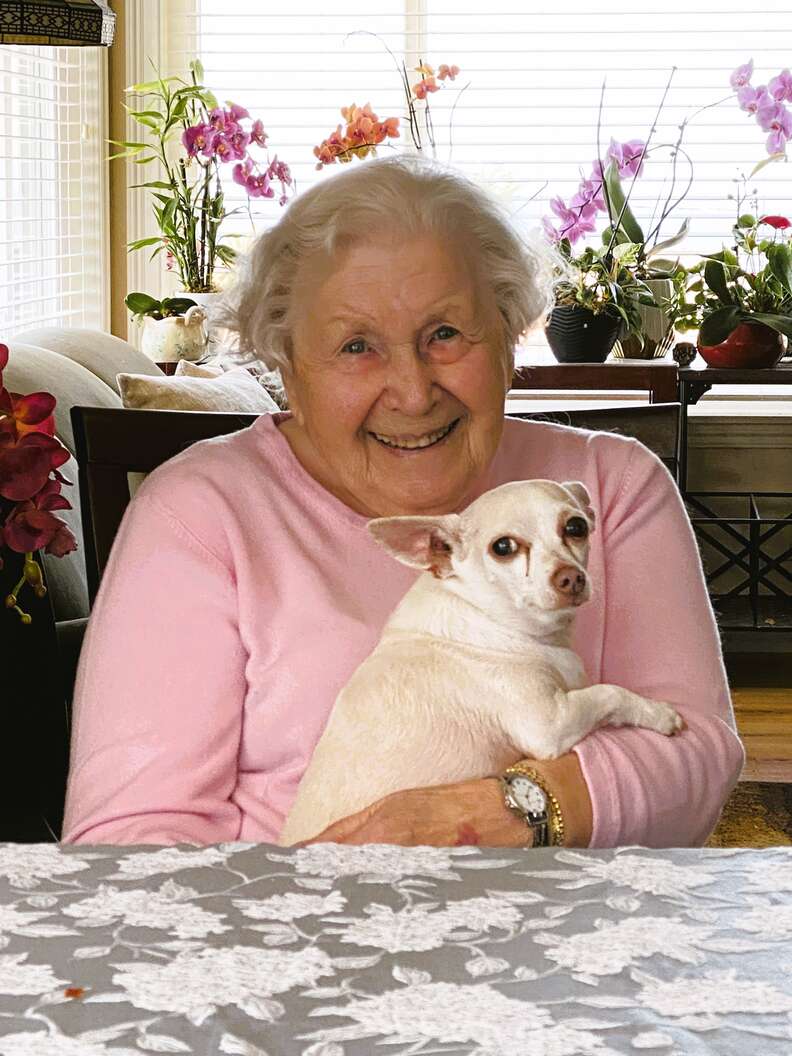
Her daughter, Debbie, remained actively involved in her life, and Johanna also had a caretaker who could assist with the practical responsibilities of having a dog.
Alice learned about these arrangements through Johanna’s detailed application. Rather than leaving the rescue to wonder how a woman of her age would manage, Johanna had already provided information about the help available to her.
That made an important difference.
The adoption team could consider her situation as a whole, including the kind of dog that might fit comfortably into her everyday life.
And Muttville happened to specialize in dogs who were often overlooked for reasons that had little to do with how much love they could offer.
Senior dogs don’t always attract the attention that puppies do. Some have medical needs, established habits, or preferences that require a particular household. Others simply need a slower, quieter environment than many prospective adopters are looking for.
At Muttville, the goal was to help those older animals find homes suited to their individual needs.
For Johanna, that meant finding a dog who would enjoy a peaceful life with someone who spent much of her time at home.
The rescue’s adoptions manager, Kristin Hoff, soon thought of Gnocchi.
He was an older dog who had been waiting longer than anyone would have liked.
Before arriving at Muttville, Gnocchi had been rescued from a household containing 22 dogs. The details of his earlier life weren’t fully explained in the rescue’s account, but one thing was clear: his next home needed to be different.
Gnocchi needed to be the only dog.
That requirement narrowed his options.
Some adopters already had pets. Others were looking for a dog who could comfortably join a household with other animals. Gnocchi needed someone whose home could accommodate him without asking him to share his space with another dog.
As the weeks passed, he remained at the rescue.
There was nothing in the available account to suggest that he lacked affection for people. In fact, what he seemed to want most was a comfortable place to settle and someone willing to let him stay close.
For an older dog who enjoyed quiet companionship, a welcoming lap could mean more than a large yard or a house full of activity.
And Johanna had a lap waiting.
Kristin recognized the possibility of a good match. Johanna wanted a companion, and Gnocchi needed a home where he could be the center of someone’s attention without competing with other dogs.
Their circumstances were different, but their daily needs appeared remarkably compatible.
The rescue didn’t need to place Gnocchi with someone who could take him on long adventures. He needed a person who would appreciate spending time together, along with a reliable arrangement for the care and exercise he required.
Johanna’s household offered both.
Of course, a promising match on paper isn’t the same as a connection between a person and a dog. The adoption team still needed to give Johanna a chance to see Gnocchi and decide whether he felt right for her.
They arranged a virtual meeting.
During the call, Johanna was able to watch Gnocchi in a home environment. It gave her a glimpse of the dog beyond his adoption profile and allowed the rescue to introduce him in a setting where his personality could come through.
According to Alice, the connection was immediate.
For Johanna, seeing Gnocchi was enough to make her decision.
The rescue completed the adoption the following day.
Debbie helped pick up Gnocchi and brought him to his new home, where Johanna was waiting.
Then something happened that seemed to confirm what the adoption team had hoped.
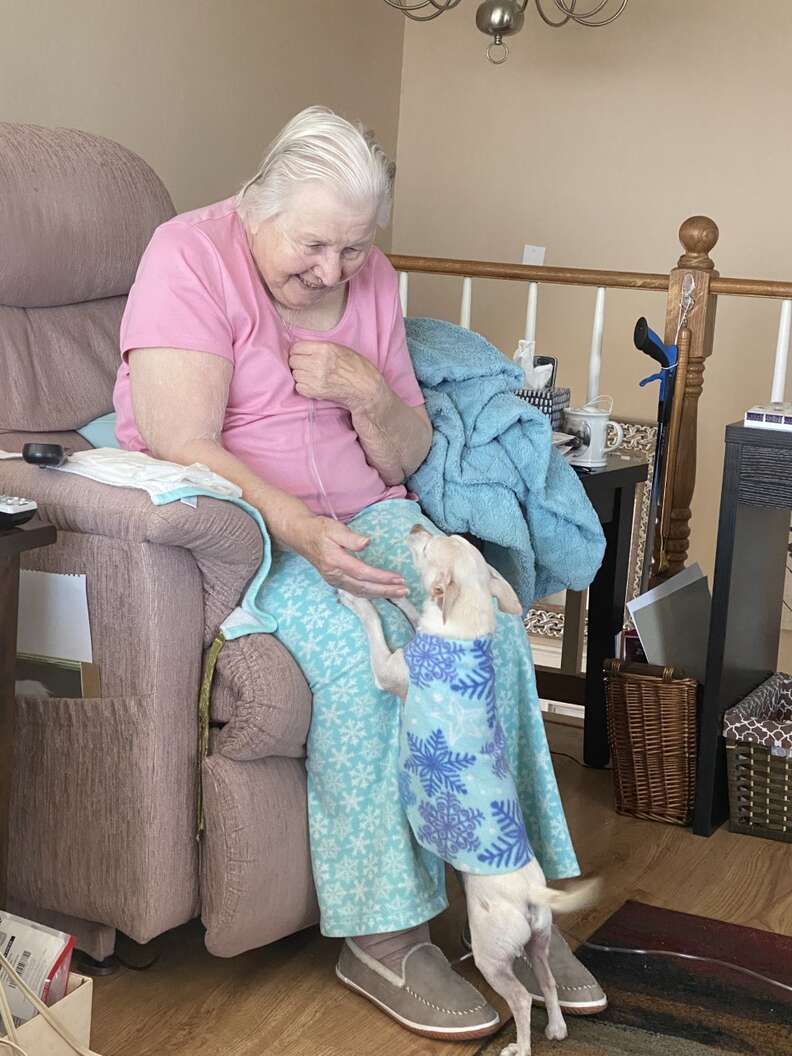
As Debbie later reported to the rescue, Gnocchi entered the house and jumped directly into Johanna’s lap.
There was no lengthy introduction described in the account, no elaborate effort to convince him to approach, and no need for Johanna to follow him around the room.
He went straight to her.
After all the time he had spent waiting for a family, the older dog had found someone who was happy to welcome him into her arms.
It was a lovely beginning, though the real success of an adoption is measured by what happens after that first meeting.
A dog can seem like a perfect match during an introduction, only for everyday routines to reveal unexpected challenges. People and animals both need time to adjust to a shared life.
In Johanna and Gnocchi’s case, the following months showed just how well the rescue had understood what each of them needed.
Gnocchi soon had a new name.
Johanna began calling him Gucci.
It was a small change, but it marked the beginning of his new life as a much-loved member of her household.
And Gucci settled comfortably into the role.
The elderly dog who had once struggled to find the right home now had something wonderfully uncomplicated: a person who wanted him nearby.
He didn’t have to adjust to living with other dogs. He didn’t need to keep up with a busy household full of competing demands.
He could simply enjoy the companionship of a woman who was delighted to have him.
For Johanna, Gucci became part of the rhythm of her days.
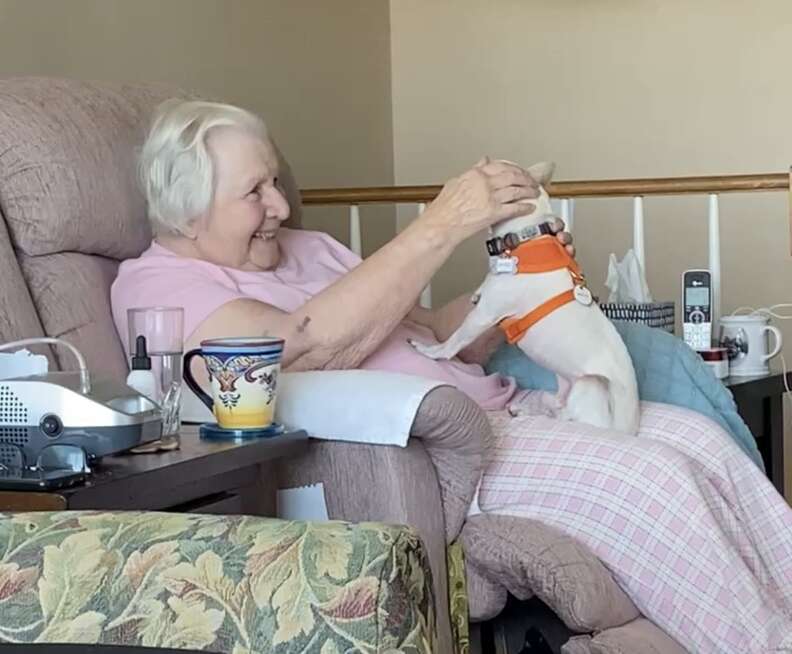
Their mornings developed a familiar pattern. After leaving the bedroom, Johanna and Gucci would make their way to the living room and settle into their favorite recliner.
There, they would spend time together while Johanna watched the news.
Gucci was content to sit with her, enjoying the attention and closeness that had become such a regular part of his new life.
They often stayed together until the afternoon.
For someone looking at their routine from the outside, there might not have seemed to be much happening.
A woman watched television. A dog rested in her lap. The hours passed quietly.
But that ordinary routine was precisely what made the adoption so successful.
Gucci had found a home where he didn’t have to be anything other than himself.
Johanna had found a companion who enjoyed the same unhurried pace.
The practical side of Gucci’s care was handled through the support system Johanna had described in her application. Her caretaker took care of the dog’s daily walks, allowing Johanna to enjoy his company while making sure his exercise needs were met.
Debbie also remained involved, helping support the arrangement that had brought the two together.
It wasn’t a situation in which Johanna had to manage every responsibility independently.
Instead, the people around her helped make it possible for her to enjoy the relationship she wanted with her dog.
That distinction matters.
The success of Johanna’s adoption wasn’t based on pretending that age had no effect on her circumstances. It came from recognizing those circumstances honestly and finding a dog whose needs could be met within them.
Gucci received daily care, a home without other dogs, and plenty of affection.
Johanna received the companionship she had been hoping for.
Neither had to fit into an unrealistic picture of what their relationship should look like.
They simply developed a life together that suited them both.
As the months went by, Gucci became increasingly familiar with his place in Johanna’s home. He had his daily routine, his favorite place to rest, and a person who welcomed his company.
There is something reassuring about the predictability of life with a beloved dog.
For many owners, the relationship becomes woven into ordinary moments rather than dramatic occasions. The dog is there when the morning begins, when the television comes on, and when someone settles down to rest.
Those habits may seem small, but they give companionship its shape.
Johanna and Gucci’s relationship was built around exactly that kind of everyday closeness.
And it meant more to Johanna than simply having another living creature in the house.
When Muttville checked in approximately a year after the adoption, she spoke openly about how much her new companion had added to her life.
At the time, Johanna was approaching her 102nd birthday.
She had spent a full year with the dog she adopted at 100, and her happiness was evident in the update she shared with the rescue.
“He brings me so much joy!” Johanna told Muttville.
She especially loved having Gucci sit on her lap and keep her company.
But she also explained something that revealed the deeper importance of their relationship.
Having Gucci in her life meant having someone to love and care for.
At her age, she said, that made a real difference.
It was a simple observation, but an important one.
Companionship isn’t always just about receiving attention or affection. Sometimes the ability to give those things matters just as much.
Johanna had a dog who depended on her household for his care, looked to her for affection, and shared the familiar hours of her day.
She wasn’t merely being entertained by an animal. She had a relationship in which her attention, tenderness, and presence mattered.
And Gucci, after waiting so long for a suitable home, had become the focus of that affection.
Debbie was equally enthusiastic about the match.
Describing the relationship to Muttville, she said her mother and Gucci were “thick as thieves.”
She also made it clear that Gucci had become thoroughly spoiled.
The dog who once needed someone willing to accommodate his particular circumstances had turned out to be a devoted couch companion.
Debbie affectionately described him as a couch potato, which made him an especially good match for her mother.
It was hard to imagine a more comfortable arrangement for two companions who enjoyed spending so much time together.
Gucci didn’t need Johanna to be younger.
Johanna didn’t need Gucci to be a playful puppy.
They had found a shared pace that worked.
And while their ages were central to what initially made the adoption unusual, they were not what made the relationship successful.
What mattered was the careful matching of their needs.
Gnocchi had spent considerable time at Muttville because his requirement to be the only dog made finding the right household more difficult.
Johanna’s application might have been dismissed too quickly by someone who looked only at her age.
But the rescue considered the details.
Alice recognized that Johanna had meaningful support at home. Kristin saw that Gnocchi could fit into her life. Debbie and Johanna’s caretaker helped make the arrangement practical.
Those individual decisions allowed a relationship to develop that might otherwise never have happened.
The story also offers a useful reminder about senior dogs.
An older dog may not be the right choice for every household, just as a younger dog may not be right for every person. Temperament, health, energy level, and individual circumstances all deserve careful consideration.
But age alone doesn’t tell the whole story.
Gucci’s quiet personality and preference for being the only dog had made him a difficult match for some prospective adopters.
In Johanna’s home, those same characteristics fit naturally into the life she wanted to share.
He didn’t need to become a different dog to be loved.
And she didn’t need to change her lifestyle to make room for him.
There is no way to know exactly what Gucci remembered about his earlier life among so many dogs, or how he understood the move from rescue care into Johanna’s home.
Dogs cannot explain those experiences to us.
What could be observed was much simpler: he settled into a comfortable routine, accepted affection, and spent his days close to the woman who had adopted him.
Johanna, meanwhile, was able to describe what the relationship meant to her.
At nearly 102, she was still finding happiness in the familiar experience of caring for a beloved animal.
The year following Gucci’s adoption wasn’t remarkable because of an extraordinary adventure or a dramatic transformation.
It was remarkable because of how ordinary their life together had become.
A senior dog who had struggled to find a home now had a favorite recliner.
A woman who applied to adopt him at 100 now had a companion beside her as she watched the morning news.
Their days were filled with the quiet comforts they both seemed to enjoy.
When Alice first noticed Johanna’s age on that adoption application, she couldn’t have known how the relationship would unfold.
She knew only that the woman had expressed a sincere wish to adopt and had the support needed to care for a dog.
A year later, Johanna and Gucci had given the rescue a wonderful update on what that decision had made possible.
The dog who had once been known as Gnocchi was now a cherished member of a family, loved for exactly the kind of companion he was.
And Johanna had gained something she clearly valued: the pleasure of having someone to care about, someone to welcome beside her, and someone to share the quieter hours of life.
Their story doesn’t suggest that every senior dog belongs with an elderly adopter, or that every older person should take on the responsibility of a pet.
It shows what can happen when a rescue looks carefully at the needs of both the animal and the person offering a home.
Sometimes a successful adoption is not about finding someone who can give a dog the busiest or most exciting life.
Sometimes it’s about finding the person who will be happiest spending an afternoon in the same chair.
For Johanna and Gucci, that was enough.
And after a year together, the two had made that chair a place where neither had to spend the day alone.
Based on reporting by Caitlin Jill Anders for The Dodo, published November 17, 2023, with information provided by Muttville Senior Dog Rescue.
If Johanna and Gucci’s story brought a smile to your face, consider sharing it with someone who understands how much an older dog can bring to a person’s life.





Discussion about this post