

There is a particular kind of disappointment that rescue workers know well. A dog arrives at an adoption event, surrounded by people who have come looking for a companion. There are introductions, gentle hands reaching into pens, and conversations about which dog might be the right fit. Then the event ends, and one of the dogs goes home with the same people who brought him.
For Darby, that experience had become painfully familiar.
At just 5 pounds, the 2-year-old dog was small enough to be carried in a purse. He was playful, affectionate, and happy around other dogs. He loved a stuffed octopus and could race around with the kind of energy that makes a room feel lively. Yet when people met him at adoption events, they often seemed to notice something else first: his legs looked different.
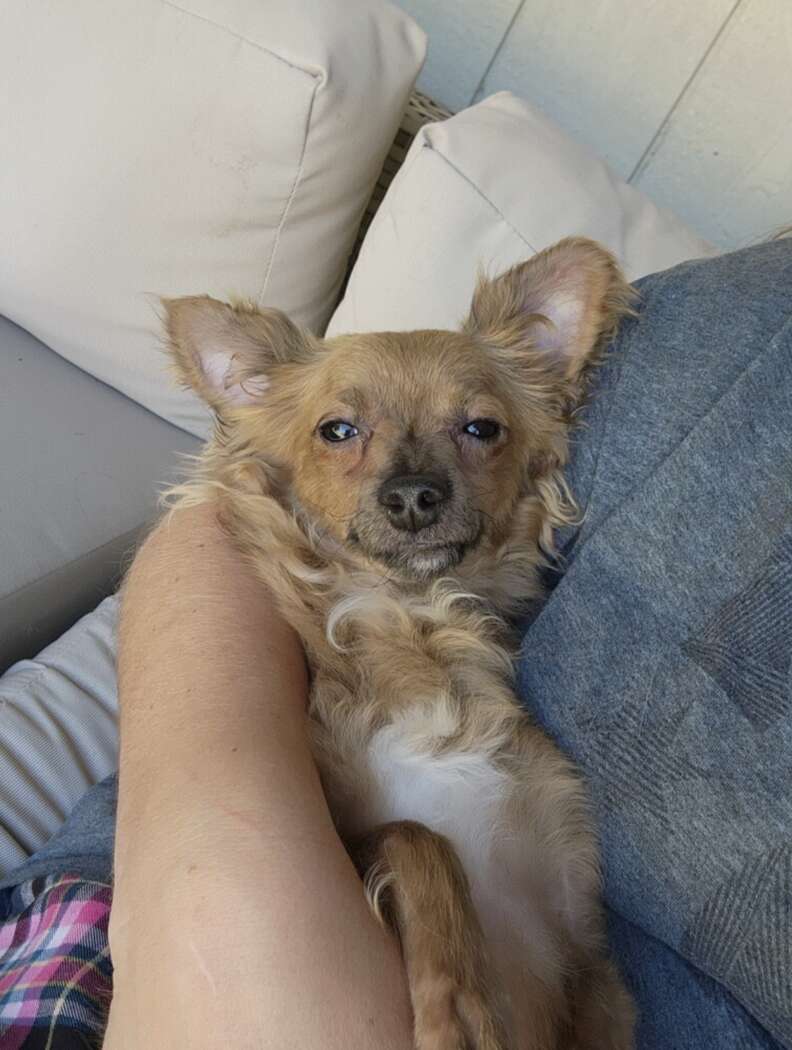
By July 2025, Darby had spent months waiting for a family, and the people caring for him were struggling to understand why such a loving little dog kept being passed over.
His story with Paw Squad 559, a rescue organization based in Clovis, California, began about five months earlier. The group had received a call from an overcrowded shelter. The shelter was having trouble finding a home for Darby and wanted to know whether the rescue could take him in.
It was the sort of request rescue groups receive when an animal needs another opportunity to be seen. The shelter was full, and Darby was not attracting adopters. Paw Squad 559 agreed to help.
When the team first met him, the lack of interest was puzzling. Darby was young and remarkably small, two qualities that often appeal to people hoping to adopt a dog. Nothing about his friendly personality suggested he would be difficult to love. But his medical examination revealed something that had apparently made prospective adopters hesitate.
X-rays showed that Darby’s kneecaps were fused rather than moving as they normally would.
Helga Weiss, president of Paw Squad 559 and Darby’s foster mom, explained that difference to The Dodo. The condition affected his appearance, and it was enough to make some people look past him without trying to get to know him.
That distinction mattered. Darby’s knees were part of his life, but they were not a complete description of the dog himself. At home, Weiss saw an energetic little companion who enjoyed playing and being close to others. At adoption events, however, visitors sometimes treated his appearance as if it told them everything they needed to know.
People choose dogs for all sorts of reasons. Sometimes they fall for a face in a photograph. Sometimes they want a certain size or temperament. And sometimes they arrive with a clear picture of how their future pet is supposed to look. Darby had the size and sweetness many adopters were seeking, but he did not match that picture in one visible way.
The reaction was not simply a matter of people choosing another dog. According to Weiss, some visitors openly questioned what was wrong with him. At one event, people reached over the enclosure to pet a different dog and pushed Darby aside when he came near.
It is a small action to describe, but a difficult one to forget. Darby had approached people who were there to meet dogs, and those people moved him out of the way. Weiss, who knew how affectionate he could be, had to watch it happen.
She told The Dodo that he had received virtually no adoption interest. For a dog who seemed so easy to enjoy in a familiar setting, that absence was especially hard on the people hoping to find him a home.
The most troubling change was not in his energy or his ability to play. It was in the way he began to behave around prospective adopters.
Weiss noticed that Darby was approaching people less often at events. The dog who loved company was becoming more reluctant to seek it from strangers. No one can say exactly what Darby understood about being passed over, and it would be unfair to assign him human thoughts. But his foster mom could see a change in his behavior. After repeated experiences in which people showed little interest, he was hanging back.
For anyone who has lived with a shy or overlooked dog, that detail may be the hardest part of his story. A visitor sees a few minutes of an animal’s behavior and forms an impression. The person who cares for that animal every day sees much more: the way he plays, the company he seeks, the routines he enjoys, and the personality that does not always appear in an unfamiliar place.
Darby was not a dog whose life revolved around sitting quietly in a pen. At home, he ran around with remarkable enthusiasm. Weiss described his sudden bursts of speed as almost impossibly fast for such a tiny body. His fused kneecaps had not erased his love of movement or made him uninterested in play.
He also got along well with other dogs. That was another part of his character that might not have been obvious to someone looking briefly into an adoption enclosure. To his foster family, he was a sociable little fellow, not a medical condition that happened to have a name.
Then there was the stuffed octopus.
Of all the toys Darby could have enjoyed, that one had become a favorite. The detail is wonderfully ordinary. It gives a clearer picture of him than any description of his knees could: a tiny dog with a toy he especially likes, ready for another round of fun.
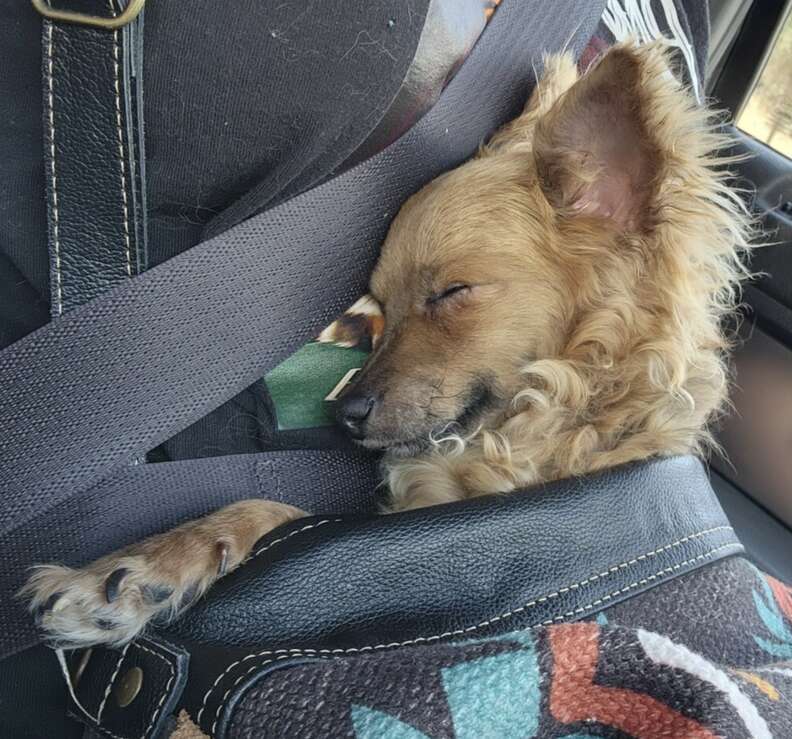
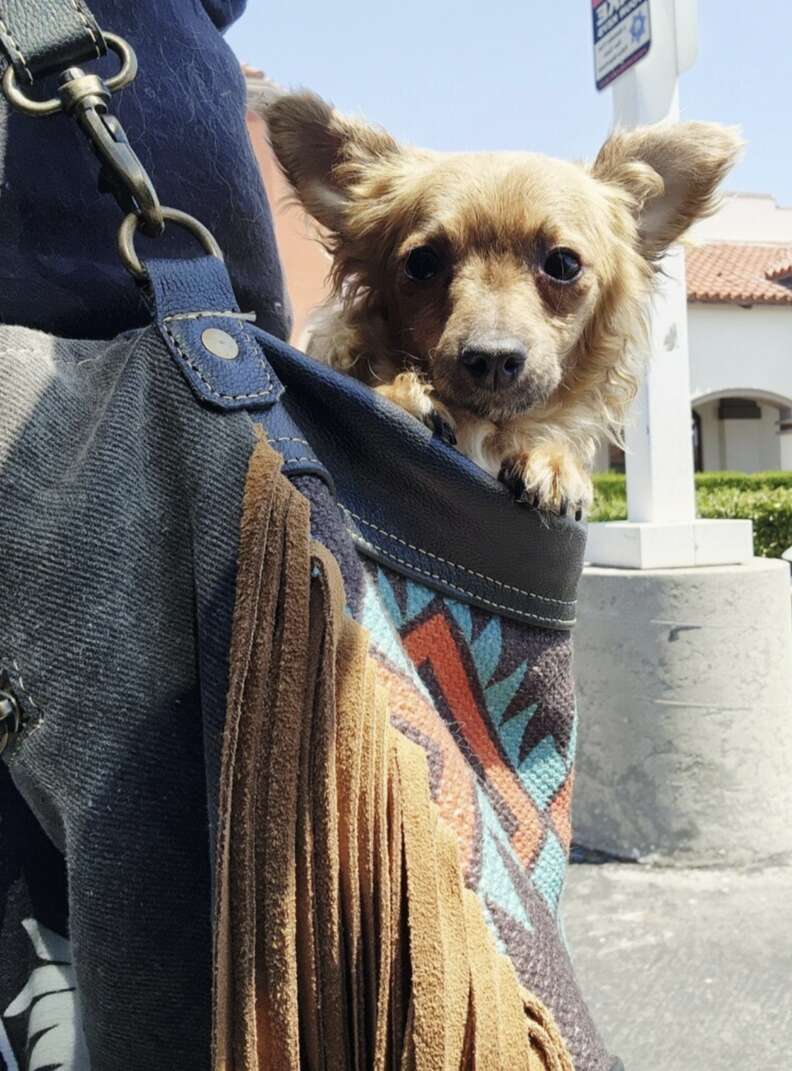
His other favorite activity was even more revealing. Darby loved being carried in Weiss’ purse. He did not merely tolerate the arrangement. When he wanted to be picked up and brought along, he would turn in little circles as if asking for his place inside it.
For a dog who weighed only 5 pounds, being carried was practical. For Darby, it was also something he clearly enjoyed. He liked staying close to the person caring for him, accompanying her in a way that suited his small size. That affection was not difficult to see once someone spent enough time with him.
These were the things Weiss wished potential adopters would notice first. There was a dog who played with enthusiasm, enjoyed canine friends, treasured his toy, and wanted to be near his person. Those qualities were not hidden. They simply required someone to look beyond the first impression made by his legs.
Darby did have needs that a future family would have to consider. Paw Squad 559 explained that he should live in a home without stairs or a pool. The rescue did not describe a long list of other accommodations. Finding the right home would mean taking those straightforward environmental requirements seriously and making sure his living situation was safe for him.
That is an important part of adopting any animal, whether or not the dog has a visible disability. A good match depends on what the animal needs and what the household can provide. Darby was not suited to every floor plan, but the rescue believed he could fit happily into many families’ lives.
His knees were not something a prospective owner should ignore. Nor were they a reason to dismiss everything good about him. The responsible approach was to understand his condition, consider the home’s layout, and decide whether the family could offer him a comfortable place to live.
Weiss had already seen what Darby was like when he felt at ease. She knew his playful side, the way he enjoyed other dogs, and the little spins that meant he wanted a ride in her purse. That knowledge made the adoption events difficult. Other people were meeting him for the first time, but she was watching a dog she cared about go unnoticed again and again.
Darby was being fostered by someone who could speak to those ordinary, meaningful details. Weiss did not ask people to overlook his needs or pretend that his knees were normal. She wanted them to understand that the condition was manageable in an appropriate home, and that there was a lively, affectionate dog behind the unusual appearance.
There was also no dramatic transformation needed to make Darby worthy of adoption. He did not have to become faster, smaller, friendlier, or more appealing. He was already a 5-pound dog who loved to play and enjoyed being carried close to someone he trusted. The challenge was finding people willing to appreciate him as he was.
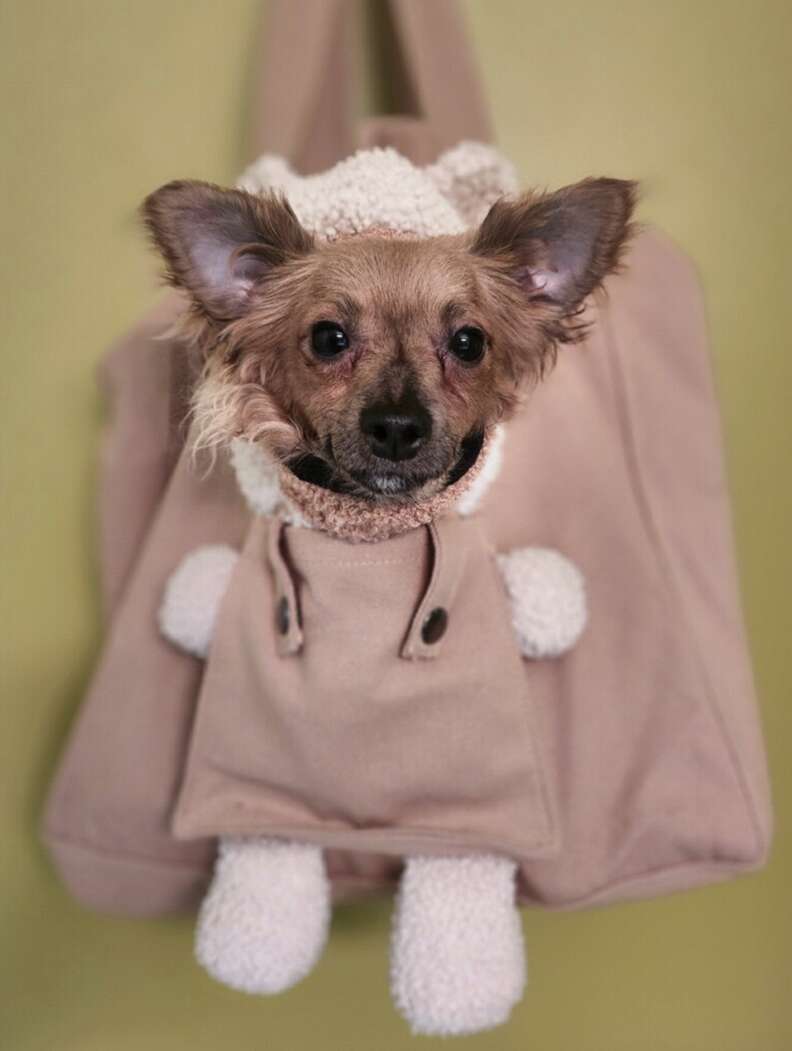
When The Dodo shared Darby’s story in July 2025, a permanent home had not yet been reported. His future was still uncertain. Paw Squad 559 was looking for someone who could provide a safe environment without stairs or a pool, and who would welcome the dog they had come to know rather than focus on what made him look different.
Darby could not explain himself to the people leaning over his pen. He could not tell them about the stuffed octopus, the games with other dogs, or the little circles he made when he wanted to climb into Weiss’ purse. Those details had to come from the people who knew him.
And they told a much fuller story than his kneecaps ever could.
Somewhere, there may have been a person looking for exactly the kind of companion Darby already was: small enough to carry, spirited enough to make them laugh, and affectionate enough to want to stay close. What remained was for that person to meet him with patience, understand his needs, and give him the chance that so many others had passed by.
At the time his story was published, Darby was still waiting. But nothing about his unusual legs made him any less deserving of a home where he would be welcomed, known, and loved.
If Darby’s story stays with you, consider sharing it with someone who believes every dog deserves to be seen for more than first appearances.


Discussion about this post